opening day of the novel
Bonasera Seeks Justice
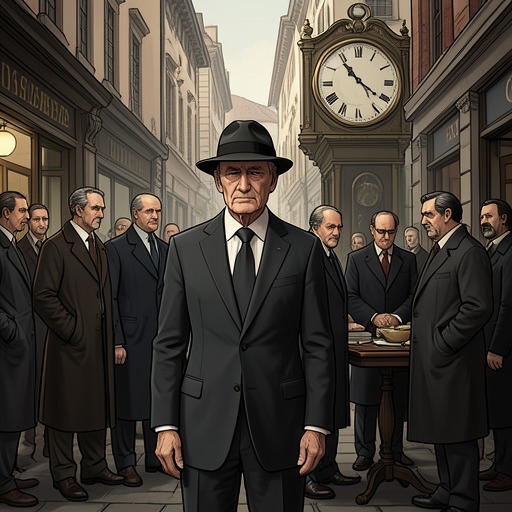
[Amerigo Bonasera](entity:character-recall-character-amerigo-bonasera-d8f014e53837) watches the court suspend the sentences of the two young men who assaulted and disfigured his daughter. Disillusioned with American law, he resolves to seek justice from [Vito Corleone](entity:character-recall-character-vito-corleone-778b0dbb1b06), whose private system of favors appears more reliable than the courts.
The episode establishes the moral and institutional world of the novel: legality and justice are separate things, and allegiance to a powerful patron can replace faith in public authority.
August 1945
The Wedding Appeals
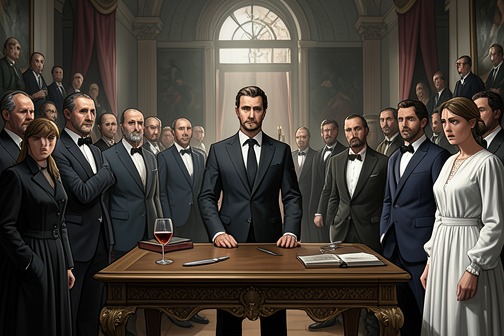
At [Constanzia Corleone](entity:character-recall-character-constanzia-corleone-9bf1cc7074a4)'s wedding, supplicants gather to approach [Vito Corleone](entity:character-recall-character-vito-corleone-778b0dbb1b06): [Nazorine](entity:character-recall-character-nazorine-51decfe75ae5) seeks help keeping [Enzo](entity:character-recall-character-enzo-e10ddc20fe9d) in America, Anthony Coppola needs money for a pizzeria, and [Amerigo Bonasera](entity:character-recall-character-amerigo-bonasera-d8f014e53837) waits to ask for vengeance. The wedding becomes a public demonstration of the Godfather's authority and network of obligations.
The family is introduced in miniature. [Santino Corleone](entity:character-recall-character-santino-corleone-19df60ebccd5) is powerful but impulsive, [Fredo Corleone](entity:character-recall-character-fredo-corleone-81a23b5348b3) dutiful but weak, [Michael Corleone](entity:character-recall-character-michael-corleone-7eb347d89912) proudly separate, and [Tom Hagen](entity:character-recall-character-tom-hagen-40fc1f41242f) the adopted outsider who serves as counselor.
during the August 1945 wedding
Michael Explains the Family
[Michael Corleone](entity:character-recall-character-michael-corleone-7eb347d89912) tells [Kay Adams](entity:character-recall-character-kay-adams-3326b20c3081) that [Luca Brasi](entity:character-recall-character-luca-brasi-06cd719e00af) helped [Vito Corleone](entity:character-recall-character-vito-corleone-778b0dbb1b06) defeat enemies during the earlier olive-oil war. Kay begins to understand that Michael's father is connected to organized violence, though Michael still treats the revelation as something belonging to the past.
Michael's attempt to distance himself from the family is already unstable. His intimate knowledge of its history and his pride in his father's power reveal the conflict between his chosen identity and his inheritance.
later on the wedding day
Bonasera Accepts the Debt
[Amerigo Bonasera](entity:character-recall-character-amerigo-bonasera-d8f014e53837) asks [Vito Corleone](entity:character-recall-character-vito-corleone-778b0dbb1b06) to punish the two men who ruined his daughter. The Don rejects his offer of money and forces him to acknowledge that he had previously rejected friendship and relied exclusively on American courts.
When Bonasera finally calls him friend and accepts the debt, Vito promises justice as a gift from his wife, while reserving the right to call on Bonasera's services someday.
the wedding night in August 1945
Fontane Appeals to His Godfather
[Johnny Fontane](entity:character-recall-character-johnny-fontane-249307d1dddf) arrives broken by divorce, professional decline, and [Johnny Fontane's loss of voice](entity:state-recall-state-johnny-fontane-s-loss-o-6af943654d95). [Vito Corleone](entity:character-recall-character-vito-corleone-778b0dbb1b06) rebukes his self-pity, urges him to act like a man, and promises to secure the movie role denied by [Jack Woltz](entity:character-recall-character-jack-woltz-81d7933b81c5).
The Don's famous promise, “[I’ll make him an offer he can’t refuse](entity:expression-recall-expression-i-ll-make-him-an-o-6bb971cd6cb4),” becomes the first major demonstration of the power behind his sentimental relationships.
the night after the wedding
Hagen Becomes Consigliere
[Genco Abbandando](entity:character-recall-character-genco-abbandando-7638bc0e4e2d) dies, and [Vito Corleone](entity:character-recall-character-vito-corleone-778b0dbb1b06) formally appoints [Tom Hagen](entity:character-recall-character-tom-hagen-40fc1f41242f) as Consigliere despite the tradition that the position belong to a full-blooded Sicilian. Hagen's adoption into the household and his legal training are revealed as the foundation of his loyalty.
The appointment confirms that Vito values competence and personal fidelity over convention, while also exposing the vulnerability of an Irish-German outsider inside the Sicilian power structure.
several days after the wedding
The Horse-Head Intimidation
[Tom Hagen](entity:character-recall-character-tom-hagen-40fc1f41242f) visits [Jack Woltz](entity:character-recall-character-jack-woltz-81d7933b81c5) in Los Angeles and politely requests that [Johnny Fontane](entity:character-recall-character-johnny-fontane-249307d1dddf) receive the leading role. Woltz refuses, relying on his wealth, political connections, and friendship with J. Edgar Hoover.
After Woltz continues to resist, the severed head of his prized horse is placed in his bed. Terrified by the message, Woltz orders Johnny to report for work, proving that the Corleone method combines patience with overwhelming escalation.
the same week as the horse-head intimidation
Bonasera’s Justice Delivered
[Paulie Gatto](entity:character-recall-character-paulie-gatto-66e5f1952752) and two enforcers attack Jerry Wagner and Kevin Moonan, the young men who assaulted [Amerigo Bonasera](entity:character-recall-character-amerigo-bonasera-d8f014e53837)'s daughter. They leave both victims severely injured but alive, fulfilling [Vito Corleone](entity:character-recall-character-vito-corleone-778b0dbb1b06)'s promise without creating a public murder case.
The punishment restores Bonasera's faith in the Don and demonstrates the layered chain of command through which Vito's orders are insulated from direct attribution.
late 1945
Sollozzo Proposes Narcotics
[Virgil Sollozzo](entity:character-recall-character-virgil-sollozzo-3ac51b03a24f) approaches [Vito Corleone](entity:character-recall-character-vito-corleone-778b0dbb1b06) seeking two million dollars and political protection for an international heroin operation. [Tom Hagen](entity:character-recall-character-tom-hagen-40fc1f41242f) argues that narcotics will become the future of organized crime, while [Santino Corleone](entity:character-recall-character-santino-corleone-19df60ebccd5) shows enthusiasm for the profits.
Vito refuses because narcotics would endanger his political relationships and legitimate businesses. Santino's eager interruption reveals a division within the family and gives Sollozzo evidence that the Corleones may be vulnerable.
late 1945
The Don Rejects Sollozzo
[Vito Corleone](entity:character-recall-character-vito-corleone-778b0dbb1b06) formally tells [Virgil Sollozzo](entity:character-recall-character-virgil-sollozzo-3ac51b03a24f) that the narcotics proposal is too dangerous for the family. He wishes Sollozzo success but refuses to provide money or political protection.
The refusal converts a business disagreement into a struggle for survival. Sollozzo now knows that the Corleone family stands between him and a secure narcotics empire.
the weeks before Christmas 1945
Luca Brasi Infiltrates
On [Vito Corleone](entity:character-recall-character-vito-corleone-778b0dbb1b06)'s orders, [Luca Brasi](entity:character-recall-character-luca-brasi-06cd719e00af) pretends to resent his position in the [Corleone Family](entity:organization-recall-organization-814736305664) and approaches [Bruno Tattaglia](entity:character-recall-character-bruno-tattaglia-1caf5ea8dd27)'s nightclub. He seeks information about Sollozzo's narcotics plans while maintaining his apparent loyalty to the Don.
Brasi's mission shows the sophistication of Vito's intelligence system, but it also places the family's most dangerous operative directly inside the enemy's trap.
December 1945
Hagen Is Kidnapped
[Tom Hagen](entity:character-recall-character-tom-hagen-40fc1f41242f) is seized outside his office by [Virgil Sollozzo](entity:character-recall-character-virgil-sollozzo-3ac51b03a24f) and taken to a basement apartment. Sollozzo tells him that [Vito Corleone](entity:character-recall-character-vito-corleone-778b0dbb1b06) has been killed and demands that Hagen persuade [Santino Corleone](entity:character-recall-character-santino-corleone-19df60ebccd5) to accept a narcotics settlement.
Hagen recognizes that Sollozzo understands the Corleone power structure and that the kidnapping is designed to force a negotiated transition, not merely to remove a lawyer.
December 1945
Vito Corleone Is Shot
While buying fruit near his office, [Vito Corleone](entity:character-recall-character-vito-corleone-778b0dbb1b06) is ambushed by two gunmen. He is shot five times but survives, while [Fredo Corleone](entity:character-recall-character-fredo-corleone-81a23b5348b3) is left paralyzed by shock and unable to defend him.
The attack, known as the [Shooting of Don Vito Corleone](entity:event-recall-event-4d3c38bd606e), breaks the long peace among the Families and forces [Santino Corleone](entity:character-recall-character-santino-corleone-19df60ebccd5) to assume emergency control.
immediately after the shooting
Santino Takes Command
[Santino Corleone](entity:character-recall-character-santino-corleone-19df60ebccd5) receives conflicting reports about his father's condition, [Tom Hagen](entity:character-recall-character-tom-hagen-40fc1f41242f)'s abduction, and [Luca Brasi](entity:character-recall-character-luca-brasi-06cd719e00af)'s disappearance. He fortifies the Long Beach Corleone mall, summons [Salvatore Tessio](entity:character-recall-character-salvatore-tessio-58261a08f1ac)'s loyal men, and orders [Michael Corleone](entity:character-recall-character-michael-corleone-7eb347d89912) brought home.
His first response is to prepare for war, but his anger and impulsiveness contrast with the measured strategy his father would have used.
the night before the shooting
Luca Brasi Is Murdered
[Virgil Sollozzo](entity:character-recall-character-virgil-sollozzo-3ac51b03a24f) and [Bruno Tattaglia](entity:character-recall-character-bruno-tattaglia-1caf5ea8dd27) lure [Luca Brasi](entity:character-recall-character-luca-brasi-06cd719e00af) to the nightclub with a narcotics offer. While Bruno grips one hand and Sollozzo the other, an accomplice garrotes Brasi with a thin cord.
His murder is concealed through the old Sicilian message of “[Sleeping with the fishes](entity:expression-recall-expression-sleeping-with-the-3afdb0c5285b),” leaving the Corleones without their most feared enforcer at the moment of crisis.
the first days after Vito's shooting
Paulie Gatto Is Exposed
[Santino Corleone](entity:character-recall-character-santino-corleone-19df60ebccd5) investigates the repeated calls made to [Paulie Gatto](entity:character-recall-character-paulie-gatto-66e5f1952752)'s home during his suspicious illnesses. Telephone records show that Paulie received calls from a booth near [Vito Corleone](entity:character-recall-character-vito-corleone-778b0dbb1b06)'s office whenever Paulie was supposed to guard the Don.
The evidence identifies Paulie as the traitor who supplied the attackers with the Don's movements, while clearing [Peter Clemenza](entity:character-recall-character-peter-clemenza-71852f5eba58) of suspicion.
two days after the shooting
Paulie Gatto Is Executed
[Peter Clemenza](entity:character-recall-character-peter-clemenza-71852f5eba58) deceives [Paulie Gatto](entity:character-recall-character-paulie-gatto-66e5f1952752) by claiming that the [Corleone Family](entity:organization-recall-organization-814736305664) is searching for an apartment to use if it must enter a mattress war. After luring him onto a deserted road, [Rocco Lampone](entity:character-recall-character-rocco-lampone-876d89a709ce) shoots him in the car.
The public discovery of Paulie's body warns other potential traitors that the Corleone Family remains capable of swift retaliation despite the Don's injuries.
about one week after the shooting
The Hospital Defense
[Michael Corleone](entity:character-recall-character-michael-corleone-7eb347d89912) visits [Vito Corleone](entity:character-recall-character-vito-corleone-778b0dbb1b06) at the French Hospital and finds the official detectives and family guards inexplicably absent. He moves his father to another room and recruits [Enzo](entity:character-recall-character-enzo-e10ddc20fe9d) to stand outside as a false guard.
Captain [Mark McCluskey](entity:character-recall-character-mark-mccluskey-2141a4bdeec2) arrives, admits that he removed the guards, and strikes Michael after Michael accuses him of taking Sollozzo's money. The incident transforms Michael's anger into a cold determination to enter the family war.
the morning after the hospital defense
Bruno Tattaglia Is Killed
After learning that Captain [Mark McCluskey](entity:character-recall-character-mark-mccluskey-2141a4bdeec2) has corrupted the hospital guard and assaulted Michael, [Santino Corleone](entity:character-recall-character-santino-corleone-19df60ebccd5) authorizes the killing of [Bruno Tattaglia](entity:character-recall-character-bruno-tattaglia-1caf5ea8dd27). The act is the first openly acknowledged Corleone counterstrike.
It ends the possibility of a simple truce and persuades [Virgil Sollozzo](entity:character-recall-character-virgil-sollozzo-3ac51b03a24f) that the Corleones intend to eliminate him rather than merely negotiate.
shortly after Bruno Tattaglia's death
Michael Volunteers for Murder
[Michael Corleone](entity:character-recall-character-michael-corleone-7eb347d89912) proposes meeting [Virgil Sollozzo](entity:character-recall-character-virgil-sollozzo-3ac51b03a24f) and Captain [Mark McCluskey](entity:character-recall-character-mark-mccluskey-2141a4bdeec2) under the pretense of negotiation, then killing both men. Santino initially laughs at the proposal, but Michael insists that the plan is logical: he is the only person Sollozzo will underestimate, and the only available man who can kill a police captain.
His argument marks Michael's decisive entry into the family business. He abandons the identity of the civilian son and accepts violence as his inherited duty.
late December 1945
The Restaurant Assassinations
[Michael Corleone](entity:character-recall-character-michael-corleone-7eb347d89912) meets [Virgil Sollozzo](entity:character-recall-character-virgil-sollozzo-3ac51b03a24f) and Captain [Mark McCluskey](entity:character-recall-character-mark-mccluskey-2141a4bdeec2) at an East Bronx restaurant. A gun planted behind the toilet cistern allows him to shoot Sollozzo through the head and then kill McCluskey with two deliberate shots.
The murders, known as the [Assassination of Virgil Sollozzo and Captain McCluskey](entity:event-recall-event-ac72ceb0aaad), make Michael a killer in the eyes of the underworld and force him into exile in Sicily.
immediately after the restaurant assassinations
The Five Families War
New York police suspend protection for gambling, prostitution, and other illegal businesses, while the Families retaliate against Corleone soldiers and properties. Bombings, raids, and executions begin across the city.
The [Five Families War](entity:event-recall-event-10db27a64543) converts the private feud into a national underworld conflict and makes Michael's return impossible until [Vito Corleone](entity:character-recall-character-vito-corleone-778b0dbb1b06) can negotiate a new political settlement.
late 1945 to 1946
Fontane Rebuilds His Life
[Johnny Fontane](entity:character-recall-character-johnny-fontane-249307d1dddf) reconnects with [Ginny Fontane](entity:character-recall-character-ginny-fontane-af2f8ca92866) and his daughters, resumes a responsible role as a father, and begins building a career as a producer. He brings [Nino Valenti](entity:character-recall-character-nino-valenti-1dec1d90d52f) to Hollywood, records Italian songs with him, and secretly uses his network to prepare independent films.
His renewed loyalty to [Vito Corleone](entity:character-recall-character-vito-corleone-778b0dbb1b06) appears in the way he helps Nino without being asked, converting gratitude into action and giving the Don a personal gift beyond money.
about two years after the wedding
Nino Wins the Oscar Night
[Johnny Fontane](entity:character-recall-character-johnny-fontane-249307d1dddf) wins the Academy Award for his film, while [Nino Valenti](entity:character-recall-character-nino-valenti-1dec1d90d52f) remains his sober companion. The celebration turns grotesque as Hollywood revelers try to exploit and publicly display the two award winners.
Nino protects Johnny from the debauchery and carries him home, revealing that their friendship has become the emotional center of Johnny's new life even as Nino's own self-destruction accelerates.
early twentieth century
Vito Corleone’s Youth
The narrative turns back to [Vito Corleone](entity:character-recall-character-vito-corleone-778b0dbb1b06)'s childhood in Sicily, where his father is murdered by the Mafia and the twelve-year-old Vito is sent to America under the name Corleone. In New York he works for [Genco Abbandando](entity:character-recall-character-genco-abbandando-7638bc0e4e2d) and builds a quiet family life.
His exile establishes the roots of his lifelong hostility to arbitrary authority and his belief that a man must create his own protection when society refuses it.
1919
Vito Joins the Hijackers
After losing his grocery job, [Vito Corleone](entity:character-recall-character-vito-corleone-778b0dbb1b06) joins [Peter Clemenza](entity:character-recall-character-peter-clemenza-71852f5eba58) and [Salvatore Tessio](entity:character-recall-character-salvatore-tessio-58261a08f1ac) in hijacking silk trucks. He contributes caution and planning to their reckless enterprise and earns enough money to support his wife and children.
The theft is Vito's first practical step into organized crime, though his defining talent is not violence but his ability to judge risk and command confidence.
shortly after the 1919 hijacking
Vito Studies Fanucci
[Fanucci](entity:character-recall-character-fanucci-cc86aed63206) demands a share of the hijacking proceeds, invoking [Pizzo](entity:concept-recall-concept-pizzo-35f5ea265291) protection and threatening the young men with police retaliation. Clemenza and Tessio believe they must pay, but Vito studies Fanucci's history and concludes that the Black Hand extortionist has no powerful backing.
Vito decides that Fanucci's demands are not merely an expense but an opportunity to seize the neighborhood's protection network.
1919
Vito Murders Fanucci
[Vito Corleone](entity:character-recall-character-vito-corleone-778b0dbb1b06) gives [Fanucci](entity:character-recall-character-fanucci-cc86aed63206) part of the demanded money, follows him across the rooftops, and kills him in the doorway of his apartment with three shots. He destroys the gun and wallet and returns home without attracting suspicion.
The murder, known as the [Murder of Don Fanucci](entity:event-recall-event-530bcd94b010), is the turning point that establishes Vito as a man of honor and opens the way for his authority over the neighborhood.
1920s
Vito Builds the Olive Empire
After [Fanucci](entity:character-recall-character-fanucci-cc86aed63206)'s death, storekeepers and gamblers voluntarily seek [Vito Corleone](entity:character-recall-character-vito-corleone-778b0dbb1b06)'s protection. He forms the [Genco Pura Olive Oil Company](entity:organization-recall-organization-92f2d464167d) with [Genco Abbandando](entity:character-recall-character-genco-abbandando-7638bc0e4e2d), using [Peter Clemenza](entity:character-recall-character-peter-clemenza-71852f5eba58) and [Salvatore Tessio](entity:character-recall-character-salvatore-tessio-58261a08f1ac) as salesmen and enforcers.
Vito's business grows through a mixture of legitimate commerce, monopoly, political influence, and carefully calibrated coercion. His system of favors becomes both a moral code and an economic machine.
the Prohibition era
Prohibition Expands Vito’s Power
[Vito Corleone](entity:character-recall-character-vito-corleone-778b0dbb1b06) lends his trucks and men to bootleggers, then protects small Italian speakeasies and builds a payoff sheet among police and judges. He supports families of imprisoned workers, turning loyalty into a durable institutional obligation.
When [Prohibition](entity:time-recall-time-cd049808797b) ends, Vito's organization has become too deeply rooted in gambling, unions, politics, and protection to depend on alcohol. The [Corleone Family](entity:organization-recall-organization-814736305664) emerges as an alternative government.
1933 to 1934
The Maranzano War
[Vito Corleone](entity:character-recall-character-vito-corleone-778b0dbb1b06) seeks a partnership with Salvatore Maranzano and is rejected. He responds by attacking Maranzano's gambling, policy, union, and protection interests, while [Luca Brasi](entity:character-recall-character-luca-brasi-06cd719e00af) eliminates two Chicago gunmen sent to kill him.
The conflict ends when [Salvatore Tessio](entity:character-recall-character-salvatore-tessio-58261a08f1ac) lures Maranzano to a false peace meeting and kills him. Vito incorporates the defeated empire and becomes the dominant power in New York.
mid-1930s
Sonny Enters the Family
[Santino Corleone](entity:character-recall-character-santino-corleone-19df60ebccd5) is caught in an armed robbery and admits to [Vito Corleone](entity:character-recall-character-vito-corleone-778b0dbb1b06) that he witnessed [Fanucci](entity:character-recall-character-fanucci-cc86aed63206)'s murder. Instead of pursuing law school, Sonny insists that he wants to enter the family business.
Vito accepts his son's destiny and places him under [Genco Abbandando](entity:character-recall-character-genco-abbandando-7638bc0e4e2d)'s supervision, while warning him that anger and public threats are dangerous weaknesses.
1935 to 1939
Vito Creates Peace
After [Vito Corleone](entity:character-recall-character-vito-corleone-778b0dbb1b06) is wounded by Irish gunmen, Sonny leads the family in urban warfare while [Luca Brasi](entity:character-recall-character-luca-brasi-06cd719e00af) terrorizes remaining opponents. Vito later travels across the United States to negotiate a working peace among the strongest Families.
By 1939, Vito has constructed a national system of boundaries, mutual services, and restrained violence. This peace becomes the foundation for the Families' wartime prosperity and later catastrophe.
1941 to 1945
Michael Chooses the Marines
When [World War II](entity:time-recall-time-c7bd852e004a) begins, [Michael Corleone](entity:character-recall-character-michael-corleone-7eb347d89912) rejects his father's attempts to keep him safe and volunteers for the [United States Marine Corps](entity:organization-recall-organization-b37dc015b823). He fights in the Pacific, receives medals, and is photographed in Life magazine.
Michael's decision temporarily separates him from the family destiny. Yet his military service also gives him discipline, strategic confidence, and an identity that later makes his transformation into a crime leader more tragic.
1939 to 1945
The Long Beach Fortress
[Vito Corleone](entity:character-recall-character-vito-corleone-778b0dbb1b06) moves his family from New York City to the Long Beach mall and turns the property into a protected suburban enclave. When fraudulent furnace inspectors extort him, [Santino Corleone](entity:character-recall-character-santino-corleone-19df60ebccd5) beats them and the family later imposes its own order on the town.
The episode reveals Vito's growing interest in legitimate society while showing that his idea of public order remains enforced through private power.
late 1945
Michael Enters Exile
After killing [Virgil Sollozzo](entity:character-recall-character-virgil-sollozzo-3ac51b03a24f) and Captain [Mark McCluskey](entity:character-recall-character-mark-mccluskey-2141a4bdeec2), [Michael Corleone](entity:character-recall-character-michael-corleone-7eb347d89912) is secretly transported to Sicily. [Don Tommasino](entity:character-recall-character-don-tommasino-db5ea9afeae6) hides him in the countryside near Corleone, where Michael studies the island's history, its violence, and its Mafia social order.
Exile strips away Michael's American assumptions. He begins to see the family not as an aberration but as an inheritance shaped by poverty, fear, and resistance to official authority.
about seven months into exile
Michael Meets Apollonia
During a walk near an orange grove, Michael sees [Apollonia Vitelli](entity:character-recall-character-apollonia-vitelli-3bc58d5648eb) and experiences the Sicilian “thunderbolt,” an immediate and consuming desire. He approaches her father, [Signor Vitelli](entity:character-recall-character-signor-vitelli-1842081277be), with formal respect and asks to court her under family supervision.
The encounter replaces [Kay Adams](entity:character-recall-character-kay-adams-3326b20c3081) in Michael's emotional world and binds him to a traditional Sicilian pattern of desire, possession, family honor, and arranged marriage.
several weeks after meeting Apollonia
Michael Marries Apollonia
[Michael Corleone](entity:character-recall-character-michael-corleone-7eb347d89912) marries [Apollonia Vitelli](entity:character-recall-character-apollonia-vitelli-3bc58d5648eb) in a village wedding and moves with her into Dr. Taza's villa. Their marriage becomes intensely passionate, and Michael teaches Apollonia English and driving while [Don Tommasino](entity:character-recall-character-don-tommasino-db5ea9afeae6) increases security around the estate.
For a brief period Michael experiences domestic happiness and belonging. The marriage also makes his identity widely known and exposes him to enemies who can now reach him through his new family.
during Michael's marriage in Sicily
Luca’s Dark Secret
[Filomena](entity:character-recall-character-filomena-15029bd89a54) tells [Michael Corleone](entity:character-recall-character-michael-corleone-7eb347d89912) the hidden story of [Luca Brasi](entity:character-recall-character-luca-brasi-06cd719e00af)'s early brutality: Brasi ordered the newborn child of a woman he hated to be burned and threatened the midwife who resisted. [Vito Corleone](entity:character-recall-character-vito-corleone-778b0dbb1b06) later protected Filomena and arranged Brasi's release when Brasi attempted suicide in prison.
The revelation explains why even Vito feared Brasi and why Brasi's loyalty was based not on ordinary affection but on terror, gratitude, and submission to the only man he did not want to kill him.
about one year after Michael's exile began
Apollonia Is Assassinated
[Michael Corleone](entity:character-recall-character-michael-corleone-7eb347d89912) prepares to leave the villa while Apollonia waits in the [Alfa Romeo](entity:object-recall-object-3a9cef68306b). [Fabrizzio](entity:character-recall-character-fabrizzio-218a74a5e18e), one of Michael's guards, has secretly planted a bomb in the car and escapes through the gate before Apollonia turns the ignition.
The explosion kills Apollonia and [Calo](entity:character-recall-character-calo-379d2a59daf9), wounds Michael, and confirms that the Palermo faction was targeting him through his marriage. Michael's remaining emotional attachment to a normal life is destroyed.
about three years after the restaurant assassinations
Michael Returns Home
After recovering and receiving false papers, [Michael Corleone](entity:character-recall-character-michael-corleone-7eb347d89912) returns from Sicily to New York. He reunites with [Kay Adams](entity:character-recall-character-kay-adams-3326b20c3081), explains that a condemned Bocchicchio has confessed to the murders, and begins formal training under [Vito Corleone](entity:character-recall-character-vito-corleone-778b0dbb1b06).
Michael's return marks his final acceptance of the family business. He no longer seeks to escape his inheritance; he intends to master it and eventually reshape it.
during Michael's exile
Felix Takes the Blame
[Felix Bocchicchio](entity:character-recall-character-felix-bocchicchio-fbac3286d947), a young lawyer from the [Bocchicchio Family](entity:organization-recall-organization-b9e3ec421798), is convicted of fraud and later murders the lawyer and businessmen who sent him to prison. Facing execution, he agrees to confess falsely to killing [Virgil Sollozzo](entity:character-recall-character-virgil-sollozzo-3ac51b03a24f) and Captain [Mark McCluskey](entity:character-recall-character-mark-mccluskey-2141a4bdeec2).
[Vito Corleone](entity:character-recall-character-vito-corleone-778b0dbb1b06) guarantees pensions and education for Felix's family, while the confession supplies a legal explanation that clears Michael's public identity and makes his return possible.
about one year after Sonny's death
Lucy Finds Jules
[Lucy Mancini](entity:character-recall-character-lucy-mancini-8542d3bd8be3) moves to Las Vegas under the [Corleone Family](entity:organization-recall-organization-814736305664)'s protection and meets Dr. [Jules Segal](entity:character-recall-character-jules-segal-4155df8c13e5). Jules discovers that her sexual difficulty has a physical cause and arranges corrective pelvic surgery.
The relationship gives Lucy a life beyond her fixation on [Santino Corleone](entity:character-recall-character-santino-corleone-19df60ebccd5). Jules's medical skill and independence also bring him into the expanding network of favors that Michael later develops in Nevada.
shortly after the surgery
Lucy Reclaims Desire
After recovering from surgery, [Lucy Mancini](entity:character-recall-character-lucy-mancini-8542d3bd8be3) begins a successful sexual relationship with [Jules Segal](entity:character-recall-character-jules-segal-4155df8c13e5). His affection and humor help her overcome shame and accept that her body can give and receive pleasure beyond her past with [Santino Corleone](entity:character-recall-character-santino-corleone-19df60ebccd5).
Her recovery becomes one of the novel's few personal transformations that is not based on violence. It also strengthens the social and professional ties connecting the Corleones to Las Vegas.
about one year after Sonny's death
The Peace Conference Begins
Following [Santino Corleone](entity:character-recall-character-santino-corleone-19df60ebccd5)'s murder, [Vito Corleone](entity:character-recall-character-vito-corleone-778b0dbb1b06) summons the major American Families to a banking conference. The [Bocchicchio Family](entity:organization-recall-organization-b9e3ec421798) supplies hostages to guarantee safety, and Dons from New York, Detroit, Cleveland, the West Coast, and the South attend.
The gathering demonstrates that Vito's influence extends far beyond New York and that the criminal world is organized as a parallel political order with its own diplomacy and law.
the peace conference
Drugs Are Legalized
[Emilio Barzini](entity:character-recall-character-emilio-barzini-170df503069f) argues that the Families must share [Vito Corleone](entity:character-recall-character-vito-corleone-778b0dbb1b06)'s political protection for narcotics. After resistance from Vito and reluctant support from other Dons, the conference permits the drug trade under controlled conditions, with the Barzini and Tattaglia Families taking the leading role.
Vito preserves peace and secures a path for Michael's return, but he also accepts the strategic transformation he once feared. His concession reveals that survival and family power have become more important than principle.
the closing session of the peace conference
Vito Renounces Revenge
[Vito Corleone](entity:character-recall-character-vito-corleone-778b0dbb1b06) swears that he will not seek vengeance for [Santino Corleone](entity:character-recall-character-santino-corleone-19df60ebccd5)'s death and will not break the peace. He warns, however, that any accidental harm to [Michael Corleone](entity:character-recall-character-michael-corleone-7eb347d89912) will be interpreted as evidence of renewed hostility.
His speech turns apparent defeat into a strategic promise. He protects Michael while preserving the freedom to respond if the peace is violated, and he names [Cosa nostra](entity:expression-recall-expression-cosa-nostra-ffcfa28d75f8) as the community's right to govern itself.
spring or summer 1947
Santino Is Murdered
[Carlo Rizzi](entity:character-recall-character-carlo-rizzi-fae68de82d58) deliberately provokes Connie Corleone, beats her, and allows her to summon [Santino Corleone](entity:character-recall-character-santino-corleone-19df60ebccd5). Santino races toward her across the Jones Beach Causeway, where assassins ambush him at a tollbooth and fill his body with bullets.
The attack eliminates Vito's eldest son and exposes the family's inability to protect its most violent leader. It also confirms the enemy's strategy of using intimacy and domestic violence as a weapon.
the night of Santino's death
Vito Buries Sonny
[Vito Corleone](entity:character-recall-character-vito-corleone-778b0dbb1b06) rises from his sickbed and orders the family to suspend vengeance until after Santino's funeral. He asks [Amerigo Bonasera](entity:character-recall-character-amerigo-bonasera-d8f014e53837) to prepare Sonny's mutilated body so that his mother will not see the massacre.
The Don's restraint is not forgiveness but strategy. He recognizes that the [Corleone Family](entity:organization-recall-organization-814736305664) cannot win a prolonged war and must negotiate from a position of controlled grief.
shortly after Sonny's funeral
The Families Make Peace
[Vito Corleone](entity:character-recall-character-vito-corleone-778b0dbb1b06) gathers the Families again and accepts peace, legal protection for narcotics, and the safe return of [Michael Corleone](entity:character-recall-character-michael-corleone-7eb347d89912). He orders his men not to investigate Sonny's murder and publicly promises to honor the settlement.
In private, he tells [Tom Hagen](entity:character-recall-character-tom-hagen-40fc1f41242f) that the peace is a tactical retreat designed to protect Michael until the [Corleone Family](entity:organization-recall-organization-814736305664) can recover its political strength.
after the peace conference
Vito Plans the Succession
[Vito Corleone](entity:character-recall-character-vito-corleone-778b0dbb1b06) instructs [Tom Hagen](entity:character-recall-character-tom-hagen-40fc1f41242f), [Peter Clemenza](entity:character-recall-character-peter-clemenza-71852f5eba58), and [Salvatore Tessio](entity:character-recall-character-salvatore-tessio-58261a08f1ac) to consolidate the family, explore Las Vegas, protect Michael, and quietly purchase all land around the Long Beach mall. He announces that Michael will eventually lead the Family and that the organization will move westward.
The Don also begins monitoring the telephone calls of Clemenza and Tessio, anticipating that future treachery may come from within rather than from the openly hostile Families.
about three years after Michael's exile
Michael Courts Kay Again
[Michael Corleone](entity:character-recall-character-michael-corleone-7eb347d89912) reunites with [Kay Adams](entity:character-recall-character-kay-adams-3326b20c3081) and asks her to marry him, warning that his life will remain dangerous and secretive. He promises that the [Corleone Family](entity:organization-recall-organization-814736305664) will become legitimate within five years and that their children will grow into mainstream American society.
Kay accepts the proposal despite understanding that Michael will not treat her as an equal partner in his business life. Their marriage becomes the emotional and moral test of Michael's transformation.
late 1940s
Michael Builds Las Vegas
[Michael Corleone](entity:character-recall-character-michael-corleone-7eb347d89912) visits Las Vegas to inspect the family's hotel interests and meet [Fredo Corleone](entity:character-recall-character-fredo-corleone-81a23b5348b3), [Johnny Fontane](entity:character-recall-character-johnny-fontane-249307d1dddf), [Lucy Mancini](entity:character-recall-character-lucy-mancini-8542d3bd8be3), [Jules Segal](entity:character-recall-character-jules-segal-4155df8c13e5), and Moe Greene. He announces plans to move the family west, secure casino ownership, bring in entertainment, and build a hospital.
The meeting shows Michael translating his father's informal power into a modern corporate empire. He is less sentimental than Vito but equally capable of turning favors into ownership, institutions, and long-term control.
shortly after the Las Vegas meeting
Michael Removes Moe Greene
Moe Greene refuses to sell his casino interest and insults the [Corleone Family](entity:organization-recall-organization-814736305664). Michael responds without anger, but [Albert Neri](entity:character-recall-character-albert-neri-c8a9495c21dc) secretly records Greene's vulnerabilities and prepares the family to remove him.
Greene's defiance exposes the limits of Fredo's leadership and establishes Michael as the acting head of the Family, even before Vito formally retires.
during Michael's Las Vegas visit
Nino Enters a Coma
[Nino Valenti](entity:character-recall-character-nino-valenti-1dec1d90d52f) suffers a diabetic coma after drinking heavily and gambling through the night. [Jules Segal](entity:character-recall-character-jules-segal-4155df8c13e5) warns [Johnny Fontane](entity:character-recall-character-johnny-fontane-249307d1dddf) that Nino is deliberately destroying himself and needs psychiatric commitment.
Nino's illness reveals the emotional cost of success for a man who never wanted power. Johnny's wealth and friendship cannot save him unless Nino chooses to live.
about a year after Michael's Las Vegas visit
Moe Greene Is Murdered
Moe Greene is shot to death in the Hollywood home of his mistress while [Albert Neri](entity:character-recall-character-albert-neri-c8a9495c21dc) is absent on a supposed vacation. The killing clears the way for the [Corleone Family](entity:organization-recall-organization-814736305664) to consolidate its casino interests.
Michael's control over Las Vegas becomes secure, and Neri's return with a new living confirms his elevation as Michael's personal executioner.
about a year after the Las Vegas visit
Vito Dies Gardening
On a sunny Sunday morning, [Vito Corleone](entity:character-recall-character-vito-corleone-778b0dbb1b06) suffers a fatal heart attack while gardening with Michael's young son. His final words are “[Life is so beautiful](entity:expression-recall-expression-life-is-so-beautif-6278088e36ca),” and he dies before the ambulance arrives.
Vito's death removes the last restraint on Michael's final plan. The old Don leaves behind a family that believes it has inherited his power but does not yet understand the scale of his son's preparations.
the day after Vito's funeral
Tessio Betrays Michael
After Vito's funeral, [Michael Corleone](entity:character-recall-character-michael-corleone-7eb347d89912) tells the family officials to remain calm while secretly preparing to meet [Emilio Barzini](entity:character-recall-character-emilio-barzini-170df503069f). The meeting is arranged through [Salvatore Tessio](entity:character-recall-character-salvatore-tessio-58261a08f1ac), who believes that Michael is too weak to survive and that betrayal offers the best chance of preserving his own Family.
Michael is saddened because Tessio had been among the most intelligent and loyal men in the organization. Yet the betrayal confirms Vito's warning that the decisive enemy would approach through someone close.
the day of the Barzini meeting
Michael Conducts the Purge
While Michael remains protected at the Long Beach mall, [Rocco Lampone](entity:character-recall-character-rocco-lampone-876d89a709ce) kills [Philip Tattaglia](entity:character-recall-character-philip-tattaglia-6f17dbeeda8c), [Albert Neri](entity:character-recall-character-albert-neri-c8a9495c21dc) kills [Emilio Barzini](entity:character-recall-character-emilio-barzini-170df503069f) in a police disguise, and the Corleone forces dismantle Barzini and Tattaglia operations. Moe Greene is also removed during the same campaign.
The coordinated killings restore the [Corleone Family](entity:organization-recall-organization-814736305664) to dominance and reveal that Michael has inherited Vito's patience, intelligence, and capacity for total strategic violence.
the day of the purge
Tessio Is Executed
[Tom Hagen](entity:character-recall-character-tom-hagen-40fc1f41242f) tells [Salvatore Tessio](entity:character-recall-character-salvatore-tessio-58261a08f1ac) that Michael will meet him in a separate car, isolating Tessio from his protection. Tessio immediately understands that the arrangement is an execution and asks Hagen to save him for old times' sake.
Hagen refuses because treachery cannot be forgiven within the Corleone system. Tessio is taken away and killed, while Michael accepts the necessary loss of one of his father's oldest lieutenants.
the same evening as the purge
Carlo Confesses
[Michael Corleone](entity:character-recall-character-michael-corleone-7eb347d89912) confronts [Carlo Rizzi](entity:character-recall-character-carlo-rizzi-fae68de82d58) and accuses him of arranging [Santino Corleone](entity:character-recall-character-santino-corleone-19df60ebccd5)'s ambush through the deliberate beating of Connie. Carlo denies the charge until Michael reveals that Barzini and [Philip Tattaglia](entity:character-recall-character-philip-tattaglia-6f17dbeeda8c) are already dead.
Believing he has been spared, Carlo admits that Barzini recruited him. Michael uses the confession to establish certainty before carrying out the punishment planned by Vito.
the same evening as Carlo's confession
Carlo Rizzi Is Executed
Michael sends [Carlo Rizzi](entity:character-recall-character-carlo-rizzi-fae68de82d58) toward the airport under the pretense that he will join Connie in Las Vegas. In the car, [Peter Clemenza](entity:character-recall-character-peter-clemenza-71852f5eba58) garrotes Carlo and keeps the cord tight until he is dead.
Carlo's execution closes the account of Santino's murder and completes Michael's first major purge. It also marks Michael's willingness to sacrifice his sister's husband despite the family bond.
immediately after Carlo's execution
Connie Denounces Michael
Connie Corleone returns from the airport and hysterically accuses Michael of killing Carlo, Sonny, Barzini, Tattaglia, and countless others. Kay asks Michael whether Connie's accusations are true, and he calmly denies everything.
When Kay later sees Clemenza formally address Michael as Don Michael, she understands that Connie was telling the truth. Michael's lie is the final break between the husband she loved and the ruler he has become.
one year after Vito's death
Kay Accepts the Don
[Michael Corleone](entity:character-recall-character-michael-corleone-7eb347d89912) consolidates the national Families, closes the New York operation, and makes Las Vegas the center of the Corleone empire. Kay returns to him after [Tom Hagen](entity:character-recall-character-tom-hagen-40fc1f41242f) explains that Carlo and Tessio were dangerous traitors and that Michael offered her and the children protection.
Kay converts to Catholicism and begins praying for Michael's soul, even while preserving the household and raising their children. Her final act is not ignorance but deliberate participation in a marriage built on silence, power, and denied truth.